Why do I feel worse the healthier I try to be?
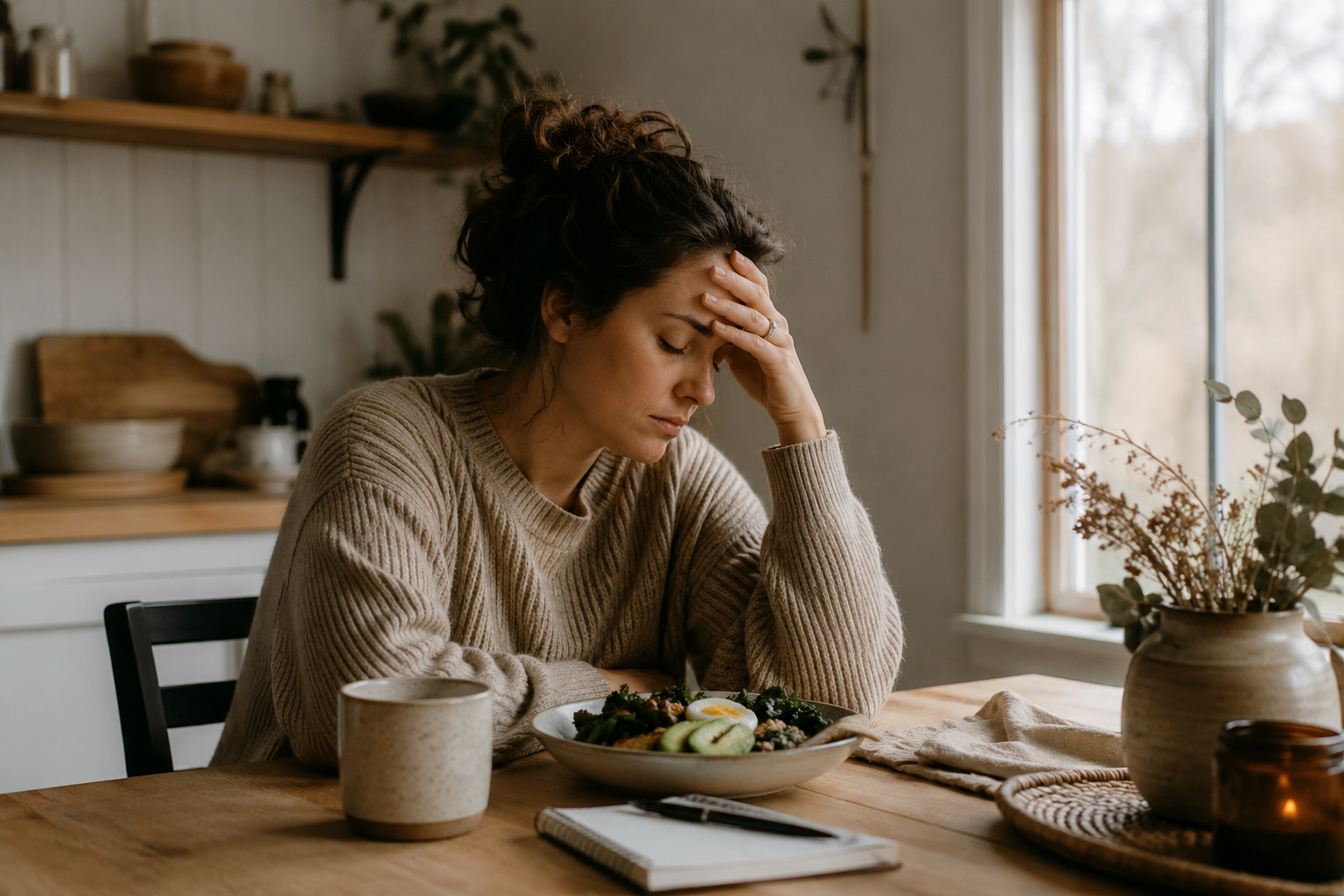
One of the more disorienting experiences in the health world is realizing that the harder you try to take care of yourself, the worse your body seems to feel.
For many people, this realization unfolds slowly over years rather than all at once, and it often begins with genuine care, a sincere desire to feel well again, to have more energy, to support the body properly, and, finally, to feel like things are moving in the right direction. So people begin making what they believe are healthier choices. They start paying attention to ingredients, cooking more at home, buying higher-quality food, drinking more water, exercising consistently, taking supplements, removing processed foods, and trying to become more disciplined and intentional with their health overall.
And for a while, these changes may feel empowering because there is often hope at the beginning: hope that if you can just learn enough, optimize enough, remove enough, support enough, your body will eventually begin responding the way you expected it to.
But for some people, something confusing starts to happen along the way.
Instead of feeling more resilient, they begin feeling more reactive, and instead of feeling more energized, they become more exhausted. Their body begins feeling increasingly sensitive, inflamed, bloated, anxious, swollen, hypervigilant, depleted, or unpredictable, and because these are often people who are trying very hard to do things “correctly,” the experience can become deeply discouraging and emotionally disorienting, especially when the outside world continues viewing them as healthy.
I worked with a woman recently who, by most external standards, would absolutely have been considered a very health-conscious person. She exclusively ate whole foods, exercised regularly, drank plenty of water, paid attention to quality of ingredients, and genuinely cared about taking care of herself well. She loved wellness, loved learning about health, and had spent years trying to support her body in thoughtful and intentional ways.
And yet underneath all of those efforts, her physiology was deeply overwhelmed.
She was dealing with persistent bloating, fatigue, irregular bowel movements, significant swelling and fluid retention, widespread inflammation, and full-body hives that could appear with something as simple as a brief workout, to the point that only a few minutes of exercise could trigger a visible histamine response across large portions of her body. Her system had become increasingly reactive despite years of “healthy” habits, and eventually she found herself asking a question I hear surprisingly often:
“Why do I feel worse the healthier I try to be?”
I think this is where many people become trapped in a very exhausting cycle because when the body feels worse, most people naturally assume they need to try harder, so the response becomes more optimization, more supplements, more elimination, more restriction, more exercise, more detoxification, more protocols, and more control. The body slowly becomes a full-time project.
But often missing from the conversation is the role of overall physiological capacity, because the body cannot remain in a prolonged state of stress without consequences for digestion, detoxification, immune regulation, hormonal balance, recovery, and overall resilience. A body that lives in a high-drive, fight-or-flight state becomes less adaptable overall because it spends so much energy simply trying to survive.
And importantly, many people do not recognize this because they still appear functional from the outside. They are productive, responsible, disciplined, high-capacity people who continue to show up for work, family, responsibilities, workouts, obligations, and daily life, but beneath that functionality, the body often compensates heavily, and eventually it begins to communicate that compensation has become costly.
This is where many people unintentionally deepen the problem by continuing to layer more intensity onto a physiology that no longer has the capacity to tolerate it well. More fasting, more aggressive detoxification, more food restriction, more exercise, more stimulation disguised as “wellness,” and more pressure become the answer to a body that is already struggling to create stability.
Here’s the important truth: healing is not always found in escalation.
Sometimes healing begins by reducing the overall burden the body has been carrying for far too long.
That became a major part of our work together because rather than continuing to push her body harder, we focused on helping her system become more regulated, nourished, and supported overall. We worked sequentially instead of aggressively, prioritized stability before intensity, supported her nervous system, reduced unnecessary physiological load, and created more consistency around nourishment, rest, rhythm, and recovery. And just as importantly, she began restructuring parts of her actual life that were keeping her body in a constant state of output and overdrive.
She reduced her work schedule, started getting home earlier, began sleeping more consistently, and created more space in her days so her body was no longer being asked to operate at maximum capacity every moment of her life. And as her nervous system settled and her physiology became more regulated overall, many of the symptoms she had spent years fighting began shifting too. The hives resolved, the bloating decreased dramatically, food flexibility expanded, swelling reduced significantly, her bowel movements became more consistent, and she lost seventeen pounds of inflammation and fluid retention within the first couple of weeks of reducing the overall burden on her system.
But perhaps the most meaningful shift was that her body no longer felt like something she was constantly battling.
I think this matters deeply because many people have unknowingly built their relationship with health around pressure and around the belief that healing comes from more discipline, more vigilance, more effort, more intensity, and more optimization, when in reality the body often becomes more resilient through a very different set of conditions that include safety, nourishment, rhythm, recovery, consistency, regulation, and support.
That is the work I do inside private nutrition coaching. We look at the body as an interconnected system, not a collection of isolated symptoms to suppress or endlessly work around. The goal is to help the body regain the stability, nourishment, and resilience that allow life to feel fun and vibrant again!