As the holiday season really gets going, I want to say something plainly: you don't need to earn your holiday meals, and you don't need to recover from them either.
If you've ever caught yourself skipping lunch to "save up" for a big dinner, or planning a cleanse for the week after, it's worth getting curious about where that urge comes from. In all my years of practice, I've found it's rarely about the food. And healthy holiday eating, the kind that actually leaves you feeling good, looks very different from restriction before and punishment after.
The holidays are a season of excess, and that's okay
There's more food, more sugar, more alcohol, more people, more travel and more late nights. None of that is a problem to solve. It's part of being human and being together, and every traditional culture I know of has had its feast days.
What helps isn't white-knuckling your way through it. It's a few steady anchors, so the abundance lands on a strong foundation instead of a depleted one.
Healthy holiday eating starts before the meal
Please don't skip breakfast to save room. Arriving at a big meal already depleted usually means eating past the point of comfortable and feeling worse afterward. A breakfast with real protein, like eggs, sausage or last night's leftovers, keeps your blood sugar steadier all day long.
If you're cooking, reach for traditional fats: butter, ghee, tallow, lard, olive oil and the drippings from the roast. Hosting is also an easy moment to quietly leave out industrial seed oils like canola and soybean, which tend to hide in store-bought dressings and sides.
And give your digestion a little head start. A few slow breaths before you sit down shift your nervous system toward rest and digest, and something bitter on the table, like a salad of bitter greens or a splash of apple cider vinegar in water beforehand, helps prime your body for a big meal.
At the table
Start with the protein on your plate, and eat slowly. It sounds almost too simple, but it changes how you feel afterward. Then let yourself enjoy the dishes you truly love, and skip the ones you only eat out of habit.
I'd also encourage you to let the gravy, the butter and the real cream be part of it. Fat slows digestion and softens blood sugar swings, so a traditional holiday plate built on meat, roasted roots and real fat is far easier on your body than one built mostly on rolls and sweets. And put your fork down between bites now and then. The conversation is part of the meal.
After the meal
If you can, take a ten- or fifteen-minute walk outside afterward. It helps your blood sugar settle, and it's a lovely thing to do together. Protect your sleep where you can, because sleep is when your body does its repair work. One late night is fine, but a week of them adds up.
Then let the next day be ordinary. There's no need for a cleanse, a fast or any kind of punishment. Just go back to your usual meals, and have a mug of broth if your digestion feels heavy.
A simple, nourishing holiday table
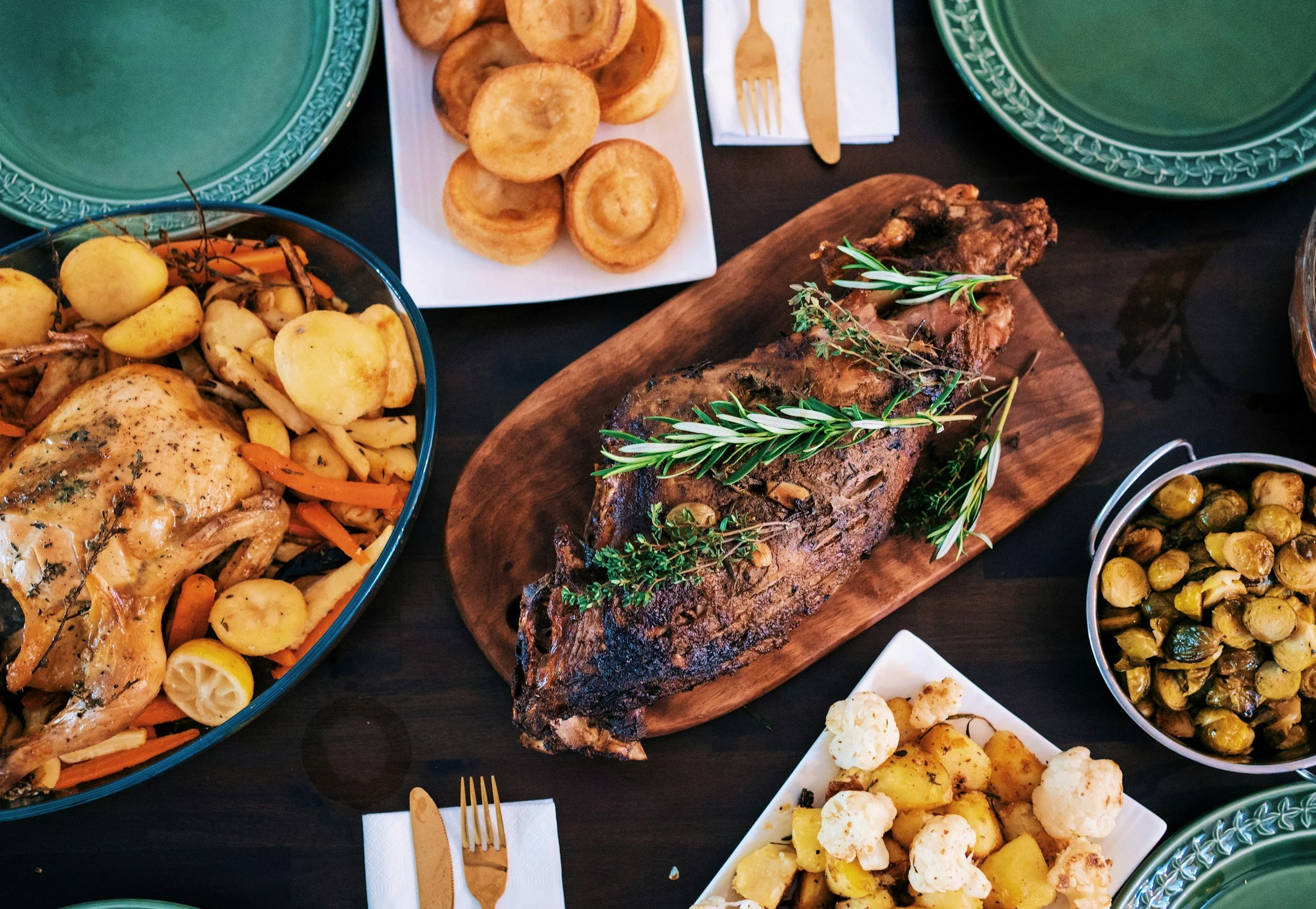
If you're hosting this year, you can build the whole table the same way you'd build a plate:
A protein centerpiece, whether that's a turkey, a rib roast, a whole chicken or a side of salmon
Roasted roots and winter squash with butter or tallow and a sprinkle of flaky salt
Something green, braised or roasted
Something fermented, like sauerkraut, pickles or a cultured relish
A real dessert, made with butter, cream and real sugar, and enjoyed without guilt
Resilience, not perfection
The goal is never to eat perfectly through the holidays. It's to enjoy the season fully and bounce back quickly.
If you've noticed that the holidays seem to hit you harder than they hit other people, with the bloating, the energy crash and the weeks it takes to feel like yourself again, that's worth paying attention to. It's usually a sign that your foundation needs support, not that you need more willpower.
Frequently asked questions
How can I avoid bloating at Thanksgiving?
Eat breakfast rather than arriving starving, eat slowly, start with protein, take a few slow breaths before the meal and go for a walk afterward. If bloating is severe or happens often, it's worth looking at your digestion more closely.
Should I fast before a big holiday meal?
For most people, no. Arriving depleted usually leads to eating past comfortable and feeling worse afterward, so a protein-rich breakfast tends to serve you much better.
How do I get back on track after the holidays?
Simply return to your usual meals the next day. There's no need for a cleanse or restriction. Warm, simple food, a little broth, a walk and an early night are usually all it takes.
Work with me
If the holidays tend to leave you depleted for weeks, that's usually the foundation asking for support, and I'd be glad to help you understand why. I work with a small number of private clients at a time, virtually and nationwide.
Three-month program: deeper, steadier work, with sessions twice a month, support in between and a roadmap built for your body. It begins with a conversation to make sure we're a good fit. Book a discovery call
Six-month guidance: three sessions and messaging support across six months, for those who want structure and a trusted guide at a gentler pace. Begin here