Eating With the Seasons: An Ancestral Guide to Fall Nourishment
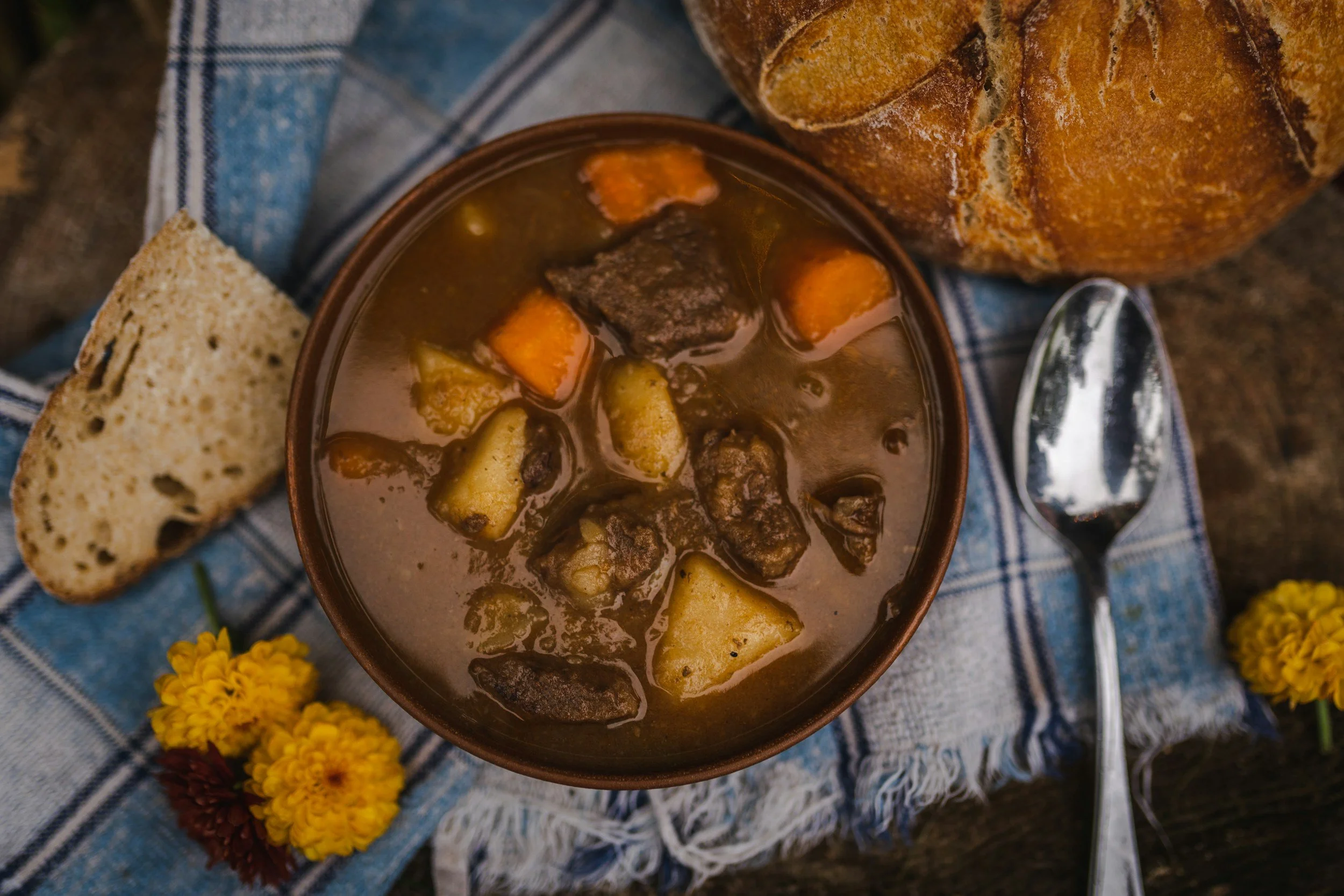
Every autumn, I can feel it arrive before I see it on the calendar. The evenings start closing in, the air gets that sharpness to it, and my appetite quietly shifts along with it. Cold salads stop sounding good, and a pot of soup starts sounding very good. If you've noticed the same thing in yourself, I want you to know it isn't a lack of willpower, and it isn't something you need to push through.
I someone who lives seasonally, I see this shift in my own body and in almost everyone I work with this time of year. What still surprises me is how rarely nutrition advice accounts for it. You're handed the same meal plan, the same macros and the same smoothie in July as in November, as though your body lives somewhere apart from the world around it. It doesn't. And once you stop working against the season, seasonal eating in the fall becomes far simpler than most people expect.
Why your body changes in the fall
As the days get shorter, your body is recalibrating. Less daylight shifts the timing of melatonin and cortisol, the hormones that set your sleep and waking rhythm, and cooler temperatures nudge your energy needs up a little. So when you find yourself hungrier for something warm and dense, sleepier in the evening and less interested in a full calendar, that's your body responding sensibly to its conditions.
This is really what I mean when I talk about the terrain. Your body is a living system, always responding to what's around it and what's inside it. When your terrain is well supported, the move into fall feels like settling in. When it isn't, the transition tends to show up as the things people chalk up to getting older or "cold season": low energy, sluggish digestion, restless sleep, and catching every bug that comes through the house.
How people have always eaten as the seasons turned
For most of human history, autumn meant harvest and preparation. It was when animals came in off pasture and were butchered, when fat was rendered and stored, when root vegetables went down into the cellar and cabbage went into the crock to ferment. Very little went to waste. Bones were simmered into broth, and the organs, the most nutrient-dense part of the animal, were eaten first and valued most.
That, in a nutshell, is ancestral nutrition. It isn't a diet with a rulebook. It's a way of eating real, whole, seasonal food, prepared so it's easier to digest and more nourishing to eat, and fall happens to be the season where it makes the most intuitive sense.
Seasonal eating in the fall: how to eat with the season
You don't need a new protocol for any of this. What helps is a handful of steady shifts that match what your body is already asking for.
Here are the seven I come back to every year:
Cook more, and eat less raw. Braised, simmered and slow-cooked meals are simply easier to digest as your body turns its energy inward, so let the big raw salads rest until summer comes back around.
Make broth a staple. Homemade bone broth is about as old as food gets. It's warming, gentle on the gut and rich in gelatin and glycine, and a mug in the afternoon or a pot that becomes the base for soup a few times a week is plenty.
Don't be afraid of animal fat. Butter, ghee, tallow and lard from well-raised animals carry the fat-soluble vitamins A, D, E and K2, and they hold up beautifully to cooking. They're what I cook with at home, and you won't find industrial seed oils like canola or soybean in my kitchen.
Lean into roots and winter squash. Sweet potatoes, carrots, beets, parsnips and squash are the season's carbohydrates, and they're grounding, satisfying and full of minerals.
Bring organ meats back to your table. Liver once a week from a pasture-raised animal is one of the most efficient ways I know to replenish iron, B12, copper and vitamin A. If the taste is new to you, blend a little into ground beef and you'll hardly notice it.
Keep fermented foods in your rotation. Sauerkraut, kefir and cultured dairy all support digestion. If you tolerate dairy and have a farmer you trust, raw milk and raw cultured dairy are foods I enjoy myself and recommend to many of my clients.
Mineralize. Seasonal transitions quietly draw down your reserves, and a pinch of good unrefined salt in your water, mineral-rich broth and plenty of leafy greens go a long way toward filling them back up.
Beyond the plate: light, rhythm and rest
Food is only one part of your terrain, and in the fall, light and rhythm matter just as much.
Try to get outside in the morning, even for ten minutes, before you pick up your phone. Morning light anchors the circadian rhythm your sleep depends on, and it matters more with every week the days get shorter. In the evening, let your home get a little dimmer. Your nervous system reads darkness as a cue to wind down, and bright screens late at night work directly against that. Give yourself permission to go to bed earlier than you did in July. Nearly everything else in nature does.
None of this is dramatic, and that's the point. Terrain work rarely is. It's the steady, unglamorous conditions you set now that decide how resilient you feel by January.
A question to carry through the season
Here's one I come back to every fall: as the light shortens, what is your body asking you to set down? Sometimes the answer is a habit that served me well all summer, and sometimes it's simply a pace I can't keep anymore. Either way, it's worth sitting with before you reach for another plan.
Frequently asked questions
What is seasonal eating?
Seasonal eating simply means choosing the foods that are naturally abundant at a given time of year and preparing them in ways that suit the season. In the fall, that usually looks like more cooked food, root vegetables, broths, animal fats and ferments, and fewer cold, raw meals.
Is bone broth actually good for you?
Absolutely. Bone broth is a traditional food that's easy to digest and rich in gelatin and the amino acid glycine. It isn't a cure for anything, but as a warm, mineral-supportive staple through the colder months, it's one of the most useful things you can keep in your kitchen.
Should I eat differently in the winter than in the summer?
In my experience, yes. Most people feel better with warmer, denser, more cooked foods as the weather cools, and lighter, fresher foods in the summer heat. Your appetite usually figures this out well before your meal plan does.
Work with me
If you've been feeling off this fall and can't quite put your finger on why, that's exactly the kind of thing I love helping people untangle. More often than not, what's missing isn't more information. It's an objective set of eyes and a clear roadmap for your body specifically. I see clients nationwide, through insurance (via Nourish) or as self-pay, and I'd be glad to work with you.